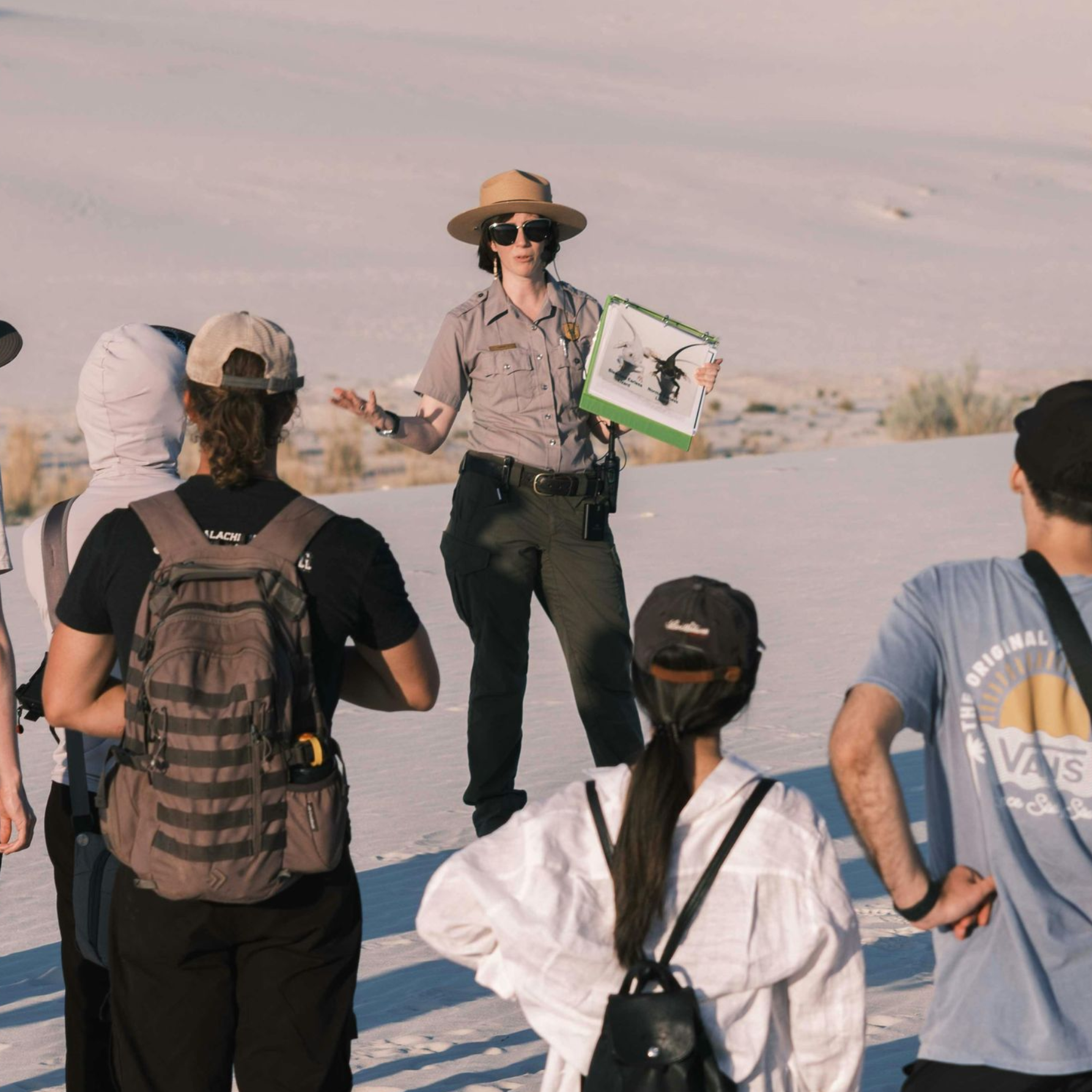








Toward Shared Stewardship of America’s Public Lands Moving Beyond Control to Collaboration Debates over who should manage America’s public lands often frame the issue as a choice between federal authority and state control. In practice, this framing oversimplifies a far more complex reality. Public lands are shaped by overlapping jurisdictions, shared responsibilities, and partnerships that already blur the lines between levels of government. The question is not whether authority should reside in one place or another, but how stewardship can be structured to balance access, conservation, and long term responsibility. Federal land management has historically provided consistency, durability, and protection at scale. National standards help safeguard ecosystems that cross political boundaries and ensure that public lands remain public across generations. At the same time, centralized systems can struggle to respond quickly to local conditions, evolving recreation patterns, and community specific needs. State led approaches, by contrast, offer flexibility, proximity, and opportunities for alignment with regional priorities, but they also raise concerns about capacity, funding stability, and uneven conservation outcomes. Rather than viewing these models as mutually exclusive, a shared stewardship approach recognizes that effective land management often emerges from collaboration. Many of the most successful public land initiatives already rely on cooperative agreements among federal agencies, state governments, tribal nations, local communities, nonprofits, and private partners. These arrangements allow authority, expertise, and resources to be distributed in ways that reflect both local knowledge and broader public interests. Shared stewardship emphasizes governance over ownership. It shifts attention away from who holds title to land and toward how decisions are made, who participates in those decisions, and what values guide them. Under this framework, federal agencies retain responsibility for long term conservation and national priorities, while states and local partners play meaningful roles in planning, implementation, and adaptive management. This approach can preserve consistency while allowing for innovation and responsiveness. For outdoor recreation, shared stewardship offers a pathway to balance access and protection. Recreation infrastructure, visitor management, and community partnerships often benefit from local leadership and regional coordination. At the same time, ecological monitoring, habitat protection, and landscape scale planning require continuity and scientific rigor that national systems are well positioned to provide. Aligning these strengths requires intentional collaboration rather than jurisdictional competition. This model also places a premium on transparency and accountability. Shared stewardship works only when roles are clearly defined, funding mechanisms are stable, and outcomes are evaluated over time. Without these safeguards, partnerships risk becoming symbolic rather than substantive. Successful collaboration demands sustained investment in communication, data sharing, and trust building across agencies and sectors. Universities and applied research institutions have an important role to play in this landscape. By serving as neutral conveners, knowledge brokers, and workforce trainers, they can support evidence based decision making and help bridge gaps between policy and practice. Research that integrates ecological science, recreation management, and community economics is particularly valuable in informing adaptive governance models. Ultimately, the future of public land stewardship will be shaped less by jurisdictional boundaries than by collective capacity. Climate change, biodiversity loss, and rising recreation demand are challenges that no single agency or level of government can address alone. Shared stewardship acknowledges this reality and offers a framework for cooperation that respects both local insight and national responsibility. Public lands are among the most enduring public investments in American history. Preserving their ecological integrity and public value requires moving beyond debates about control and toward conversations about collaboration. By focusing on shared responsibility rather than competing authority, land managers, recreation professionals, and policymakers can work toward systems that are resilient, inclusive, and worthy of the landscapes they serve.
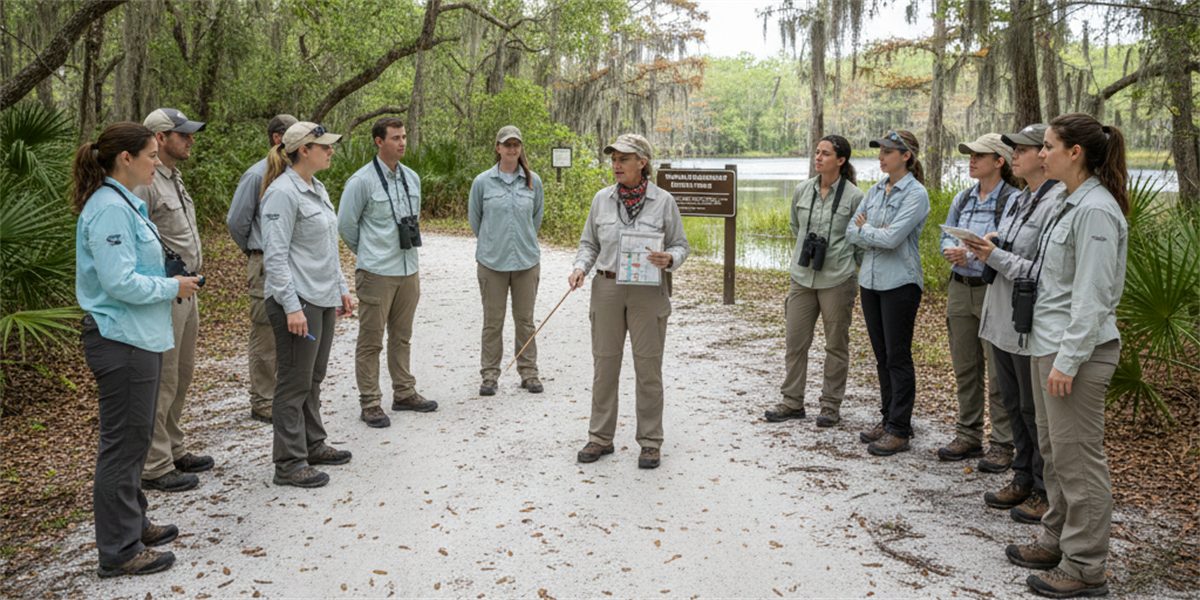
What Shifting Public Land Governance Means for Outdoor Recreation Professionals A Field Being Asked to Adapt in Real Time For outdoor recreation and natural resource professionals, debates over who manages public lands are not abstract policy conversations. They are shaping day to day work, long term career paths, and the skills required to remain effective in a rapidly changing field. As authority, access, and expectations shift, so too does the professional landscape. One of the most immediate implications is increased complexity. Recreation professionals are now navigating management systems that vary widely by jurisdiction, funding structure, and political context. Where federal agencies once provided a relatively consistent framework, professionals may now find themselves working across multiple state led systems, each with its own permitting processes, performance metrics, and stakeholder expectations. This fragmentation requires greater adaptability and a deeper understanding of governance, policy, and interagency coordination. The role of outdoor recreation professionals is also expanding beyond traditional management and operations. Increasingly, professionals are being asked to serve as translators between competing interests. Balancing recreation access, conservation priorities, community economic goals, and political realities requires skills that extend well beyond trail design or resource monitoring. Communication, facilitation, and conflict resolution are becoming central competencies, particularly as public lands attract more users and more scrutiny. Economic considerations are playing a larger role in professional decision making. As states seek to align land management with economic development, recreation professionals are often tasked with demonstrating return on investment, supporting tourism strategies, and justifying infrastructure investments. That shift places new emphasis on economic impact analysis, partnership development, and grant acquisition. Professionals who can connect recreation outcomes to broader community benefits are increasingly valued. Workforce expectations are also changing. In some settings, professionals are managing expanded responsibilities without corresponding increases in staffing or funding. In others, they are operating within entrepreneurial models that emphasize revenue generation through permits, concessions, and partnerships. These environments reward innovation and flexibility, but they can also increase burnout and blur the line between stewardship and commercialization. Navigating that tension is becoming a defining challenge of the profession. Education and training pathways must evolve alongside these changes. Technical skills remain essential, but they are no longer sufficient on their own. Future professionals need grounding in policy analysis, public administration, community planning, and applied research. They also need experience working across sectors, including nonprofits, private operators, and local governments. Universities and training programs play a critical role in preparing graduates for this more interdisciplinary and politically complex landscape. Ethical considerations are also coming to the forefront. As access expands and revenue models grow more prominent, professionals must grapple with questions about equity, inclusion, and public trust. Who benefits from expanded access. Who is left out. How are decisions justified and communicated. Maintaining legitimacy requires transparency and a clear commitment to public service values, regardless of governance structure. Despite these challenges, this period of transition also presents opportunity. Outdoor recreation professionals are uniquely positioned to shape how land management evolves. Their on the ground experience provides insight into what works, what fails, and what unintended consequences emerge over time. Professionals who engage proactively in policy discussions, research partnerships, and community planning efforts can help ensure that changes in governance lead to better outcomes rather than reactive compromises. Perhaps most importantly, this moment calls for professional leadership. As public lands become sites of intensified debate, outdoor recreation professionals are often among the most trusted voices in the room. Their ability to ground conversations in evidence, experience, and long term perspective is essential. Whether working within federal agencies, state systems, universities, or local organizations, their role in shaping the future of public lands has never been more consequential. The governance structures surrounding public lands may continue to shift, but the core mission of outdoor recreation and natural resource professionals remains the same. To steward land responsibly, facilitate meaningful access, and ensure that public resources serve both present and future generations. Adapting to change while holding fast to that mission will define the profession in the years ahead.

The Risks of Shifting Public Lands to State Control Capacity, Consistency, and the Fragility of Long Term Stewardship While arguments for expanded state control of public lands emphasize flexibility, local knowledge, and economic opportunity, the concerns raised by critics are equally substantive. These concerns are not rooted in resistance to change, but in questions of capacity, consistency, and long term responsibility. As management authority shifts closer to the local level, the safeguards built into federal systems may become harder to sustain. One of the most significant challenges is uneven capacity across states. Federal land agencies operate at a national scale, supported by stable funding streams, standardized training systems, and decades of institutional knowledge. State agencies vary widely in staffing levels, budget stability, and technical expertise. Some states are well equipped to manage large and complex landscapes. Others already struggle to maintain existing state parks, wildlife areas, and recreation infrastructure. Expanding responsibilities without equivalent and durable funding raises concerns about whether states can realistically absorb additional land management duties over time. Funding instability is a closely related issue. Federal land agencies benefit from appropriations that, while often insufficient, are at least structured around long term national commitments. State budgets are more vulnerable to economic downturns, political shifts, and competing priorities such as education, healthcare, and transportation. When revenues decline, conservation and recreation funding are often among the first areas to be reduced. This creates a risk that public lands managed at the state level could experience cycles of underinvestment, deferred maintenance, and diminished enforcement. Consistency in conservation standards is another central concern. Federal land management provides a baseline of protections that apply across ecosystems and political boundaries. These standards are particularly important for migratory wildlife, watershed protection, and landscape scale ecological processes that do not align neatly with state borders. Shifting authority to individual states can lead to fragmented management approaches, where protections vary significantly from one jurisdiction to another. Over time, this patchwork can undermine broader conservation goals and weaken ecosystem resilience. Critics also point to political pressure as a complicating factor. State agencies are often more directly exposed to short term political and economic demands, particularly in regions where public lands represent a significant share of the tax base or development potential. Decisions about leasing, permitting, and access may be influenced by immediate economic needs rather than long term ecological considerations. While federal agencies are not immune to political influence, their distance from local pressures can sometimes provide insulation for unpopular but necessary conservation decisions. Public access and equity present additional challenges. Expanded permitting and leasing can improve access for some users while restricting it for others. Fee based systems, exclusive concessions, and privatized access arrangements may unintentionally favor commercial operators or higher income users. Without careful oversight, public lands risk becoming less public in practice, even if they remain publicly owned. Ensuring equitable access requires deliberate policy choices and sustained investment, both of which can be difficult to maintain amid shifting political priorities. Wildlife and habitat protection remain central to these debates. Many species depend on large, contiguous landscapes that cross multiple jurisdictions. Federal management has historically played a key role in maintaining habitat connectivity and enforcing protections for threatened and endangered species. State led systems may face greater challenges balancing these responsibilities alongside economic development goals, particularly when conservation measures are perceived as limiting local opportunity. There is also concern about institutional memory and scientific continuity. Federal agencies maintain extensive research partnerships, long term monitoring programs, and data repositories that inform adaptive management. Fragmenting authority across states risks disrupting these systems, particularly if data standards, research priorities, and monitoring protocols diverge. Over time, this can weaken the scientific foundation that supports effective land management decisions. None of these concerns suggest that federal land management is flawless or that states lack the ability to manage public lands responsibly. Rather, they highlight the tradeoffs inherent in shifting authority. Efficiency gains achieved through localized decision making may come at the cost of consistency, stability, and long term ecological safeguards. These tradeoffs are often difficult to reverse once authority has been transferred. At its core, the debate over state control of public lands is not simply about governance structures. It is about values. It asks whether society is willing to prioritize long term stewardship over short term gains, whether conservation should be buffered from political cycles, and how public lands should serve future generations as well as present needs. As pressures on public lands continue to grow, these questions will only become more urgent. Understanding the risks associated with shifting management authority is essential for informed decision making. Thoughtful stewardship requires not only flexibility and responsiveness, but also durability, restraint, and a clear commitment to the public good over time.