Quick links
Harbor Side Convention Center
350 Harbor Dr,
Duluth, MN 55802
About the Awards
The Society of Outdoor Recreation Professionals (SORP) awards recognize outstanding accomplishments in the field of outdoor recreation planning, management, research, and policy. The SORP board selects the National Recreation Resource Leadership Award winner while the following awards are open to the public for nominations:
- Individual Service Award
- Project Excellence Award
Award winners are chosen by the Awards Work Group which is composed of NORC planning team members and SORP board members, who will evaluate nominations based on their alignment with SORP’s six values and the conference theme.
Questions?
If you have any questions or experience any problems when submitting a proposal, please contact Candace.
Candace Gallagher, Conference Coordinator
candace@americantrails.org
(530) 645-3096
NORC STATS
400+
Join 400+ professionals including planners, land managers, policy makers, and leaders and connect with peers through networking and social events.
30+
Explore 30+ classroom and field sessions over four full days, learning from 75+ speakers through engaging, hands-on workshops.
40+
Join 40+ exhibitors and showcase your organization while connecting with attendees through three days of impactful engagement.
2026 Award Recipients
Individual Service Award
Christy Tafoya
Retired, New Mexico State Parks
Christy's work has had a transformative impact on New Mexico by strengthening the bridge between industry and higher education to create meaningful pathways for youth engagement in outdoor recreation and natural resource careers. Through leadership and collaborative partnerships, Christy has helped connect New Mexico's growing outdoor economy with academic programs that prepare young people—especially those from rural and underrepresented communities—for sustainable, place-based careers that protect and enhance New Mexico’s natural and cultural landscapes.
Being the former Deputy Director of New Mexico's State Parks, Christy recognized the need for a stronger pipeline between education and employment, and played an important role in convening partners from state agencies, higher education institutions, local governments, and private industry to align training, curriculum, and workforce opportunities. This coordination effort resulted in the development of applied learning programs, internships, and field-based experiences that integrate classroom theory with real-world practice. Thanks to Christy's efforts, more college students are gaining hands-on experience in areas such as trail building, outdoor leadership, cultural interpretation, recreation management, and environmental restoration, while employers are reaping the benefit from a growing pool of trained, motivated young professionals who are ready to contribute to the state’s outdoor economy.
Many communities in New Mexico face barriers to participation in outdoor recreation fields due to geography, socioeconomic factors, and limited local opportunities. Christy helped to address these gaps by connecting Corps programs with community partners to bring outdoor education, skills training, and paid work experiences to students who might not otherwise see themselves represented in this field. This approach has helped cultivate a more diverse and inclusive next generation of outdoor professionals—individuals who not only enjoy the outdoors but also understand its economic, cultural, and ecological importance.
Christy's leadership has also influenced curricular innovation. By embedding outdoor recreation into academic pathways, NM colleges and universities are now better positioned to respond to the state’s workforce priorities. These changes have encouraged interdisciplinary collaboration between colleges in New Mexico and demonstrate that outdoor recreation is not just a leisure activity but a critical sector that drives community development, public health, and environmental sustainability.
In partnership with the New Mexico Outdoor Recreation Division, U.S. Forest Service, the National Park Service, and New Mexico State Parks, Christy played a key role in facilitating regional discussions and pilot projects that link outdoor workforce training with community development and conservation goals. Ongoing collaborations have led to new internship networks, community-based projects, and workforce summits ion New Mexico where students and employers connect directly. By aligning the goals of education, workforce development, and environmental stewardship, Christy played a key role in building a statewide framework for sustainable outdoor careers that reflects New Mexico’s unique landscape and heritage.
Ultimately, the impact of this work extends beyond job creation—it fosters a sense of belonging, stewardship, and pride among New Mexico’s youth. Christy is passionate about helping young people gain employment skills as well as develop a lifelong commitment to caring for the lands and communities that define the state. Chrisy's efforts have built the foundation for a resilient, inclusive, and forward-looking outdoor workforce that will sustain New Mexico’s people, economy, and environment for generations to come.
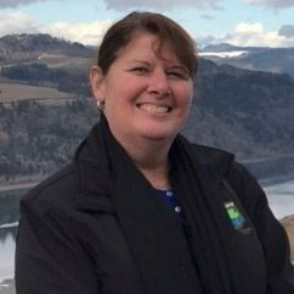
Gwen Botting
Opportunities Unlimited for the Blind
Gwen Botting (she/her/hers) is the Executive Director of Michigan’s Opportunities Unlimited for the Blind (OUB) a 501(c)(3), non-profit organization that provides blind and low vision children from across the state year-round opportunities to engage in outdoor recreation adventures that would otherwise be unavailable to them. I am nominating Gwen for a 2026 Individual Service Award from the Society of Outdoor Recreation Professionals (SORP) because her tireless work so eloquently models SORP’s six (6) values. Through her eclectic 40-year career, Gwen has pioneered the practice of sharing 3-dimentional, multi-sensory outdoor recreation experiences for thousands of historically underserved children and teens, reflecting SORP’s Values #2 and #3 focused on JEDIA, people and building community of lasting connection for OUB’s campers and staff. Gwen is directly responsible for providing year-round outdoor recreation for campers and counselors under her leadership including camping trips- helping campers learn to pitch tents and build campfires, implementing float trips -teaching them how to use canoes and kayaks, guiding children in instructional ice fishing, and outings sharing the love of hiking with campers. Through these efforts, Gwen embraces SORP’s Value #5 of Collaboration, working with, recruiting and hiring talent and outdoor recreation professionals throughout Michigan and the Great Lakes Watershed to provide unique opportunities for campers.
2026 Award Recipients
Project Excellence Award
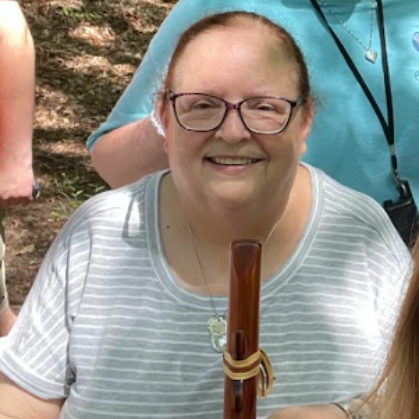
Huellas Latinas - Luisana Mendez
Huellas Latinas
Under the leadership of Luisana Méndez, founder of Huellas Latinas, this project has transformed outdoor access and community well-being for Latino families living in Minnesota. Huellas Latinas was created to address a critical gap: the lack of culturally relevant, inclusive, and accessible outdoor programming for the Latino community. Through intentional design, bilingual communication, and a deep understanding of cultural identity, the organization has empowered more than 1,500 families to reconnect with nature, improve their mental and physical health, and feel a sense of belonging in public outdoor spaces. Over the past several years, Huellas Latinas has facilitated more than 350 outdoor activities, including hikes, wellness walks, educational workshops, and family-centered nature experiences that welcome participants of all ages, including children and families with pets.
The impact of this project is visible in the growing participation, strengthened community networks, and increased confidence of Latino residents to explore Minnesota’s natural resources. Many participants join outdoor activities for the first time in their lives, overcoming cultural, linguistic, and social barriers that have historically limited their access. The organization operates with a dedicated team of 15 volunteers who work with passion, cultural competence, and a shared commitment to community well-being. These volunteers, along with community partners, help expand opportunities, strengthen outreach, and ensure that programming remains safe, welcoming, and inclusive.
This nomination aligns strongly with SORP’s six values:
Equity: The project removes barriers to outdoor participation by offering bilingual communication, culturally relevant programming, and free or low-cost activities that ensure equitable access for Latino families.
Stewardship: Participants learn to appreciate and care for Minnesota’s natural resources through guided hikes, environmental education, and responsible outdoor practices.
Community: Huellas Latinas builds strong social connections, creating a supportive network where families feel welcomed, represented, and empowered in outdoor spaces.
Well-being: Activities intentionally promote physical activity, mental health, and emotional resilience, addressing disparities in access to wellness opportunities.
Collaboration: The organization partners with local agencies, nonprofits, and outdoor groups to expand programming, share resources, and strengthen collective impact.
Inclusion: Programs are designed to honor cultural identity, family-centered traditions, and diverse abilities, ensuring that all participants feel valued and included.

Knife River Indian Villages Cultural Landscape Report
Quinn Evans, Knife River Indian Villages National Historic Site, Mike Barthelemy, Jr
Knife River Indian Villages National Historic Site (NHS) is an active place of cultural connection and evolution for members of the MHA Nation. Until this cultural landscape report, federal documentation of the NHS centered significance around archeological integrity and the Euro-American experience of the landscape. Founded on knowledge shared through oral histories, community engagement, and discussion of research findings—and shepherded by an Indigenous site superintendent—this report establishes a new standard for long-term planning for federally managed landscapes with significance to tribal communities.
The project team, guided by values transmitted by MHA members, established recommendations that welcome Indigenous people and traditional activities, expand visitor understanding of the cultural landscape and its significance to living cultures, and harness the deep knowledge of tribal communities to assist the landscape in adapting to a changing climate.
The inclusive process for developing the report was vital to its adoption by the MHA Nation as well as the National Park Service. Throughout the project, Landscape Architects immersed themselves in learning from MHA peoples about their cultural traditions and perspectives. The final report is designed to help readers learn in a similar way. Regular discussion with Indigenous collaborators ensured recommendations reflect their cultural values, while decades of archeological research and environmental monitoring through the NPS were tapped to understand the impacts of maintenance and changing environmental conditions on resources like earthlodge depressions and subsurface artifacts.
Teams comprised of MHA and NPS representatives are foundational to recommended treatment strategies, ranging from the development of accessible waysides that use MHA languages to the stabilization of damaged riverbanks using culturally significant, deep-rooted native plants. Recommendations reflect the broad values held by MHA peoples, expressed by the themes of cycles, movement, centers and peripheries, and reflection and observation. Knife River is a place that embodies these themes, fostering engagement and cultural regeneration for descendant communities.
Because the report is grounded in MHA philosophies but presented in a standard CLR format, treatment recommendations can be readily understood and utilized by NPS employees while remaining aligned with MHA values. Future management activities are entwined with and informed by the culture that shaped and is shaped by the landscape at Knife River, including traditional MHA land stewardship practices that support sustainable and resilient ecosystems.
These include, prairies whose diverse species are harvested and utilized by the descendants of those who once tended gardens in this landscape; healthy forests whose adaptive management transcends pests, invasives, and changing hydrology; and spaces for elders to pass on the knowledge of a way of being that is tied directly to this place.
The success of this CLR will be measured by the ongoing connection between the NPS and the MHA Nation as stewards of the living, breathing Knife River landscape. It lays the foundation for sustainable and adaptive management that meets the challenges of a changing world by following the guidance of those whose deep place knowledge has adapted with this landscape for centuries.

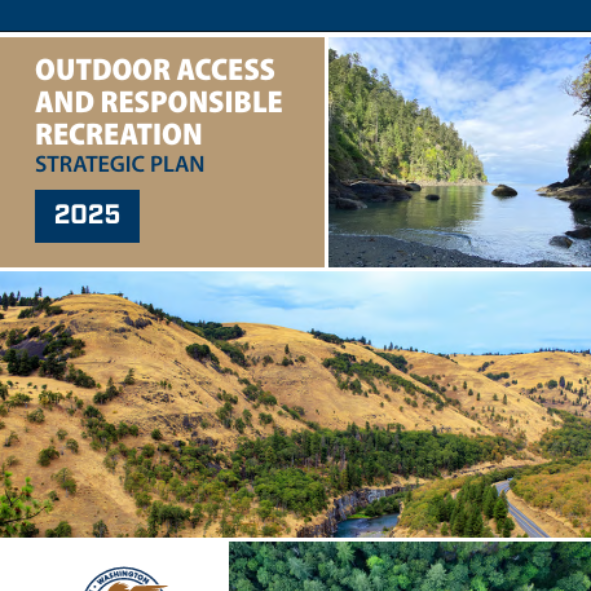
Outdoor Access and Responsible Recreation Strategic Plan
Washington State Department of Natural Resources
The Outdoor Access and Responsible Recreation Strategic Plan was developed after years of consultation and coordination with community partners, fellow land managers, Tribes, nonprofits, and recreational user groups across Washington state. An extensive public engagement process allowed voices across user groups to identify collaborative solutions that will guide recreation planning around the state for the next decade. This foundational strategic plan addresses challenges and opportunities facing the Washington Department of Natural Resources, including growing demand for recreation, increasing concerns about recreation impacts, funding gaps, and more. The plan inherently touches on many of SORP’s values due to shared priorities for sustainable recreation management.
- Collective strength, People, Community and Collaboration: This plan was drafted collaboratively with user groups, recreators, Tribes, and other land managers. The plan’s development featured a unique and intentional level of public engagement, including public meetings and opportunities for public comment and review of the plan prior to it being finalized. The drafting and review processes included early engagement and consultation with federally recognized Tribes in Washington prior to outreach with other partners. Tribal consultation and public input shaped many aspects of the plan, allowing the final product to reflect the views of a variety of user groups and the challenges facing them.
- Sustainable recreation: The foundation of the plan is to manage recreation to be sustainable for generations to come. The plan balances the challenges of increased demand for recreation with management that protects natural and cultural resources across a diverse portfolio of landscapes. Many near-term and ongoing actions in the plan demonstrate sustainable opportunities for recreation.
- Skill development: The plan highlights opportunities for education and growth for recreation staff, volunteers, and the public. The plan acknowledges the importance of volunteer support in maintaining and building sustainable recreation opportunities. One of the six aspirational goals is to, “cultivate a stewardship and responsibility ethic through user education and engagement.” This is further reflected in seven of the plan’s 15 strategies and detailed in near-term and ongoing actions.
The plan provides the first roadmap for recreation management across millions of acres of DNR-managed public lands. The plan will guide statewide recreation management by the agency for the next decade, shaping the priorities of land managers, projects, and initiatives.
Significance to community: throughout the western US, demand for recreation continues to grow steadily, while resources to manage impacts are in decline. This plan will help DNR strategically prioritize efforts and investments under the vision that our many stakeholders had a hand in shaping.
The OARR plan works to provide equitable access to DNR-managed lands to all communities across the state, including reducing barriers that disproportionately impact overburdened and vulnerable communities.
Significance to resources: Among other goals highlighted throughout the OARR Plan, some of the top priorities for management include conserving and enhancing the natural environment and cultural resources, cultivating a stewardship ethic for recreators, and mitigating climate impacts. Each goal includes actionable steps that the agency has already started or will take in the coming years to ensure success.
Kids in Parks - South Carolina Expansion
Teddi Garrick, Kids in Parks
Over the past three years, the Kids in Parks (KIP) program has led a strategic expansion of South Carolina’s outdoor recreation infrastructure. Supported by a four-year investment from the BlueCross BlueShield of South Carolina Foundation, KIP is building a statewide network of more than 150 TRACK Trails designed to engage kids and families in outdoor recreation activities that foster lifelong wellness through meaningful connections with nature.
At the center of this transformational work is Teddi Garrick, South Carolina Program Manager of KIP. Through her leadership, vision, and relationship-building, Teddi has convened more than 35 community meetings with over 500 stakeholders, including park managers, school nurses, healthcare providers, county administrators, mayors, and local community-based organizations. These meetings bring together groups that rarely sit at the same table, allowing each community to identify its collective strengths, create shared goals, and collaboratively select trail locations that best meet the needs of its citizens. With this collaborative approach, Kids in Parks has established more than 70 TRACK Trail locations in 33 of the state’s 46 counties.
Teddi’s collaborative model has sparked innovative solutions. In counties with limited trail infrastructure, Teddi has worked with local leaders to create a Fitness TRACK Trail at a community center, install a Fishing TRACK Trail along the Black River, and develop an Agritourism TRACK Trail on a privately-owned farm. In counties where a wealth of recreational resources exists, Teddi’s approach has created increased buy-in, with multiple agencies leveraging the BlueCross funding to “franchise” additional TRACK Trails, increasing outdoor recreation opportunities in the surrounding region. For example, in Oconee County, the success of the initial TRACK Trails prompted the county’s health coalition to purchase two additional TRACK Trails, which included the installation of bilingual (English and Spanish) materials. Teddi’s flexibility in responding to community needs, and her ability to work with partners, reflect a commitment to the development of sustainable recreation opportunities, regardless of a community’s existing resources or economic status.
Teddi’s work has also led to the expansion of the program’s TRACK Rx initiative, which now includes more than 50 healthcare sites. Through TRACK Rx, KIP provides hospital systems, private-practice pediatricians, and school nurses with materials to “prescribe” the program’s network of TRACK Trails to their patients. This effort is helping children build active lifestyles that address South Carolina’s challenges with obesity, cardiorespiratory fitness, and diabetes.
Since the program’s statewide expansion began, kids and families have completed 175,000 adventures, walked 225,000 miles, spent 115,000 hours outdoors, and burned 35 million calories on South Carolina’s TRACK Trails. In addition to these numbers, families have reported improved physical and mental health, stronger bonds, and memorable learning experiences.
Through Teddi’s work, KIP has become a unifying force, building authentic partnerships that center community voice with improved health and quality of life for children and families. Through her leadership, innovation, and commitment to collaboration, KIP is reshaping South Carolina’s outdoor recreation landscape, expanding access, strengthening community partnerships, and empowering thousands of children to lead healthier, more connected lives through meaningful connections with nature.